
SUIKODEN The Water Margin: Outlaws of the Marsh
Saturday, September 19 - Sunday, November 8, 2026
- Closed
- Mondays (except September 21, October 12 and November 2), October 13
- Hours
- 10:00 am to 6:00 pm (8:00 pm on Fridays)
Last admission is 30 minutes before closing time.
Exhibition Overview
The Water Margin is one of the four great classical novels of Chinese literature. Set at the end of the Northern Song dynasty (960–1127), it follows the exploits of a group of outlaws led by Song Jiang. Although the novel is a work of fiction, Song Jiang was an actual historical figure who led a rebellion during the reign of Emperor Huizong (r. 1100–1126). The tales that make up the novel’s sprawling narrative are loosely based on this kernel of historical fact.
To contextualize the Water Margin, the scope of this exhibition is necessarily broad, encompassing both Chinese art from the Northern Song to Qing (1644–1911) dynasty and Japanese art from the Edo period (1603–1868) to today. The novel’s enduring appeal is investigated from multiple angles through ukiyo-e prints, woodblock-printed books, and a wide selection of works from other periods and genres.
Today, the Water Margin remains a familiar story in Japan thanks to its numerous adaptations in novels, manga, TV shows, and video games. This exhibition invites visitors to engage with Chinese and Japanese art through the lens of the novel while also exploring how the story’s ideals of duty and loyalty have been portrayed and perceived throughout history. In doing so, the exhibition offers a space to reflect on each era’s social conditions and ideologies, and by extension, those of the world we live in today.
*The text above is taken from the exhibition catalogue, p.320.

Palace of Nine Perfections, Signed Qiu Ying, Ming dynasty, 16th century, Abe Collection, Osaka City Museum of Fine Arts
*The scene exhibited will be changed during the exhibition
Palace of Nine Perfections
Signed Qiu Ying, Ming dynasty, 16th century, Abe Collection, Osaka City Museum of Fine Arts
*The scene exhibited will be changed during the exhibition

“Lu Zhishen, the Tattooed Monk, Originally Known as Lu Da” from the series The One Hundred and Eight Heroes of the Popular Water Margin by Utagawa Kuniyoshi, Edo period, 19th century, Private collection
“Lu Zhishen, the Tattooed Monk, Originally Known as Lu Da” from the series The One Hundred and Eight Heroes of the Popular Water Margin by Utagawa Kuniyoshi
Edo period, 19th century, Private collection
Sections
*The texts below are compiled with reference to the exhibition catalogue.
Chapter One—Welcome to the Marshes of Mount Liang
The story the Water Margin which originated in China, was introduced to Japan and has long been cherished. It was Utagawa Kuniyoshi (1797–1861), an ukiyo-e artist of the late Edo period, who vividly depicted that world in his series of woodblock prints The One Hundred and Eight Heroes of the Popular Water Margin. In it, he breathed new life into the novel’s characters, fusing Chinese imagery and motifs with the traditional Japanese genre of warrior prints (musha-e). Viewers were captivated by the muscle-bound figures and bold, action-packed compositions showcasing the novel’s dramatic scenes and unique characters. A total of 74 prints from this series have been identified, and this exhibition presents the complete set. We invite you to fully immerse yourself in “the world of Mount Liang” as depicted by Kuniyoshi.
*The lighting level is reduced in the exhibition room to protect the works.

“Shi Jin, the Nine-Tattoo Dragon, and Chen Da, the Stream-Leaping Tiger” from the series The One Hundred and Eight Heroes of the Popular Water Margin, Edo period, 19th century, Private collection
“Shi Jin, the Nine-Tattoo Dragon, and Chen Da, the Stream-Leaping Tiger” from the series The One Hundred and Eight Heroes of the Popular Water Margin
Edo period, 19th century, Private collection

“Hua Rong, the Lesser Li Guang” from the series The One Hundred and Eight Heroes of the Popular Water Margin by Utagawa Kuniyoshi, Edo period, 19th century, Private collection
“Hua Rong, the Lesser Li Guang” from the series The One Hundred and Eight Heroes of the Popular Water Margin by Utagawa Kuniyoshi
Edo period, 19th century, Private collection
Chapter Two—The Times the Outlaws Lived in
The late Northern Song dynasty, the setting for the Water Margin, was an era that saw great flourishing in the urban economy and culture. Society matured and thrived, supported by metropolitan and commercial development. A work that symbolizes that prosperity is the Important Cultural Property Riverside Scenes During the Qingming Festival by Zhao Zhe depicting the bustling atmosphere of the capital, Kaifeng. We present a selection of masterpieces representative of Northern Song culture such as; Pavilions Among Mountains and Rivers by Yan Wengui, Ru ware celadon Narcissus Basin, which was highly prized in the royal court, and calligraphy works by Huang Tingjian *1, Mi Fu *2, and Su Shi *3. However, behind the glamorous urban culture, many people suffered from heavy taxes and inequality, and a sense of unease was spreading through society. The heroes of the Water Margin emerged against the backdrop of an era defined by such contradictions. In this chapter, we trace the world of the late Northern Song dynasty—a time where prosperity and unrest intertwined—through court culture and artifacts.
[Exhibition period planned*1=9/19~10/2、*2=10/3~10/25、*3=10/14~11/8]

Narcissus Basin, Ru ware, Northern Song dynasty, late 11th to early 12th century, Ataka Collection (Gift of Sumitomo Group), The Museum of Oriental Ceramics, Osaka, Photo by Muda Tomohiro
Narcissus Basin, Ru ware
Northern Song dynasty, late 11th to early 12th century, Ataka Collection (Gift of Sumitomo Group), The Museum of Oriental Ceramics, Osaka, Photo by Muda Tomohiro

Important Cultural Property, Calligraphy Album in Cursive Script by Mi Fu, Northern Song dynasty, 1097–1099, Osaka City Museum of Fine Arts, donated by Takei Takumi
[Exhibition period planned: 10/3~10/25]
Important Cultural Property, Calligraphy Album in Cursive Script by Mi Fu
Northern Song dynasty, 1097–1099, Osaka City Museum of Fine Arts, donated by Takei Takumi
[Exhibition period planned: 10/3~10/25]

Pavilions Among Mountains and Rivers by Yan Wengui, Northern Song dynasty, 10th–11th century, Abe Collection, Osaka City Museum of Fine Arts
*The scene exhibited will be changed during the exhibition
Pavilions Among Mountains and Rivers by Yan Wengui
Northern Song dynasty, 10th–11th century, Abe Collection, Osaka City Museum of Fine Arts
*The scene exhibited will be changed during the exhibition
Chapter Three—The Rise of the Water Margin, a Warrior-Vigilante Novel
Although the Water Margin is a work of fiction, its core narrative is based on an uprising led by the rebel Song Jiang in 1121 during Emperor Huizong’s reign. Historical texts describe Song Jiang and his followers only as bandits who disrupted the peace, but by the late 1200s, they had become paragons of duty in popular imagination. The 120-edition of The Complete Water Margin: A Tale of Loyalty and Duty (Late Ming dynasty, 17th century) featuring beautiful illustrations, and New Illustrated and Annotated Edition of the Plum in the Golden Vase (Late Ming dynasty, 17th century) which depicts parallel-world-like realm, also copies of the Water Margin character illustrations by Japanese artists originally created in China are shown in this chapter, showing how the story originated, spread, and came to embody a multi-layered array of images.

The Complete Water Margin: A Tale of Loyalty and Duty, Late Ming dynasty, 17th century, Institute for Advanced Studies on Asia, The University of Tokyo
*The page exhibited will be changed during the exhibition
The Complete Water Margin: A Tale of Loyalty and Duty, Late Ming dynasty, 17th century
Institute for Advanced Studies on Asia, The University of Tokyo
*The page exhibited will be changed during the exhibition

Water Margin: Part One, Qing dynasty, 18th–19th century, Umi-Mori Art Museum
Water Margin: Part One
Qing dynasty, 18th–19th century, Umi-Mori Art Museum

Ink Rubbing of the Eighteen Styles of Seal, Script Stele, Calligraphy by Mengying, Northern Song dynasty, after 984, Taito City Calligraphy Museum
Ink Rubbing of the Eighteen Styles of Seal, Script Stele, Calligraphy by Mengying
Northern Song dynasty, after 984, Taito City Calligraphy Museum
Chapter Four—Expanding the Hero Archetype
The Water Margin reached Japan in the seventeenth century, shortly after its publication in China. A succession of Japanese translations and adaptations published in the eighteenth and nineteenth centuries led to a boom in the novel’s popularity. A version titled the New Illustrated Edition of the Water Margin with text by the author Takizawa Bakin (1767–1848; pen name: Kyokutei Bakin) and illustrations by the print artist Katsushika Hokusai (1760–1849) revolutionized how the novel was depicted. Hokusai’s lifelike figures and eye-catching compositions greatly influenced later artists, Utagawa Kuniyoshi among them. In his series of the 108 heroes (see Chapter One) and other works, Kuniyoshi built on existing depictions to offer his own vibrant take on the novel. The level to which the Water Margin permeated daily life in Edo society is evidenced by the works on view, such as ukiyo-e prints likening popular courtesans to the outlaws as well as board games (sugoroku) and jacket (hanten) designs based on the story. The Water Margin inspired Bakin to write his hit novel The Eight Dogs of the Satomi Family, opening the door to a new heroic archetype.

Comic Prints of the One Hundred and Eight Heroes of the Water Margin (No. 1 of 10), by Utagawa Kuniyoshi, Edo period, ca. 1827
Comic Prints of the One Hundred and Eight Heroes of the Water Margin (No. 1 of 10), by Utagawa Kuniyoshi
Edo period, ca. 1827

New Illustrated Edition of the Water Margin, Volume One, by Kyokutei (Takizawa) Bakin, Illustrations by Katsushika Hokusai, Edo period, 1805–1807, Uragami Sokyu-do
New Illustrated Edition of the Water Margin, Volume One, by Kyokutei (Takizawa) Bakin, Illustrations by Katsushika Hokusai
Edo period, 1805–1807, Uragami Sokyu-do

Jacket with the “Wave-Cutting” Zhang Shun, by Manjisai Tachō, Edo period, 19th century, Kikakudo Collection
Jacket with the “Wave-Cutting” Zhang Shun, by Manjisai Tachō
Edo period, 19th century, Kikakudo Collection
Chapter Five—Charting the Course of “Loyalty and Duty”
The Water Margin continues to be retold and enjoyed in myriad forms today, centuries after it was first published. No longer confined to art and literature, the outlaws of Mount Liang have been reimagined and reinterpreted in movies, TV shows, manga, video games, and other contemporary media. Modern retellings consistently highlight the outlaws shared code of loyalty and duty, albeit to varying degrees. Their devotion to duty is recast to align with the times, manifesting as a symbol of resistance against corruption, or as a shared ideal that holds the heroes together. This chapter draws on Japanese readings of the Water Margin to examine the ways the story has evolved in art and culture. It also explores how the themes of duty and resistance have been recast over time. The works on view include Japanese art and media dating up to the present, like illustrations for the novel, original drawings for manga adaptations, action paintings by Kazuo Shiraga (1924–2008), and performance art by Yuki Kobayashi (1990–). Through these materials, we explore how the Water Margin has evolved within contemporary Japanese culture and art, and how themes such as loyalty and resistance have been transformed.

Original Drawings for the Water Margin, Manga by Takao Saito, 1996, Saito Production ©さいとう・たかを/さいとう・プロダクション
Original Drawings for the Water Margin, Manga by Takao Saito, 1996, Saito Production
©さいとう・たかを/さいとう・プロダクション

Heavenly Spirit, Advocator of Duty, by Kazuo Shiraga, 1964, The National Museum of Modern Art, Kyoto
Heavenly Spirit, Advocator of Duty, by Kazuo Shiraga
1964, The National Museum of Modern Art, Kyoto

Costumes from the TV Show Kenzo Kitakata: "SUIKODEN", 2026 ©北方謙三/集英社 ©2026 WOWOW/NTTドコモ
Costumes from the TV Show Kenzo Kitakata: "SUIKODEN"
2026年 ©北方謙三/集英社 ©2026 WOWOW/NTTドコモ
Topics
Costumes from the TV show: Kenzo Kitakata: "SUIKODEN" on display!
The costumes used in the TV show: Kenzo Kitakata: "SUIKODEN" which adapted the monumental epic novel series with a cumulative total of over 11.6 million copies in print, Kenzo Kitakata's Suikoden (The Water Margin) will be shown in this exhibition.The TV show: Kenzo Kitakata: "SUIKODEN" official website:
https://suikoden-drama.com/
The actor of the show Kazuya Kamenashi is the exhibition’s audio guide narrator!
Kazuya Kamenashi plays the main character, Lin Chong, on the TV show: Kenzo Kitakata: "SUIKODEN".
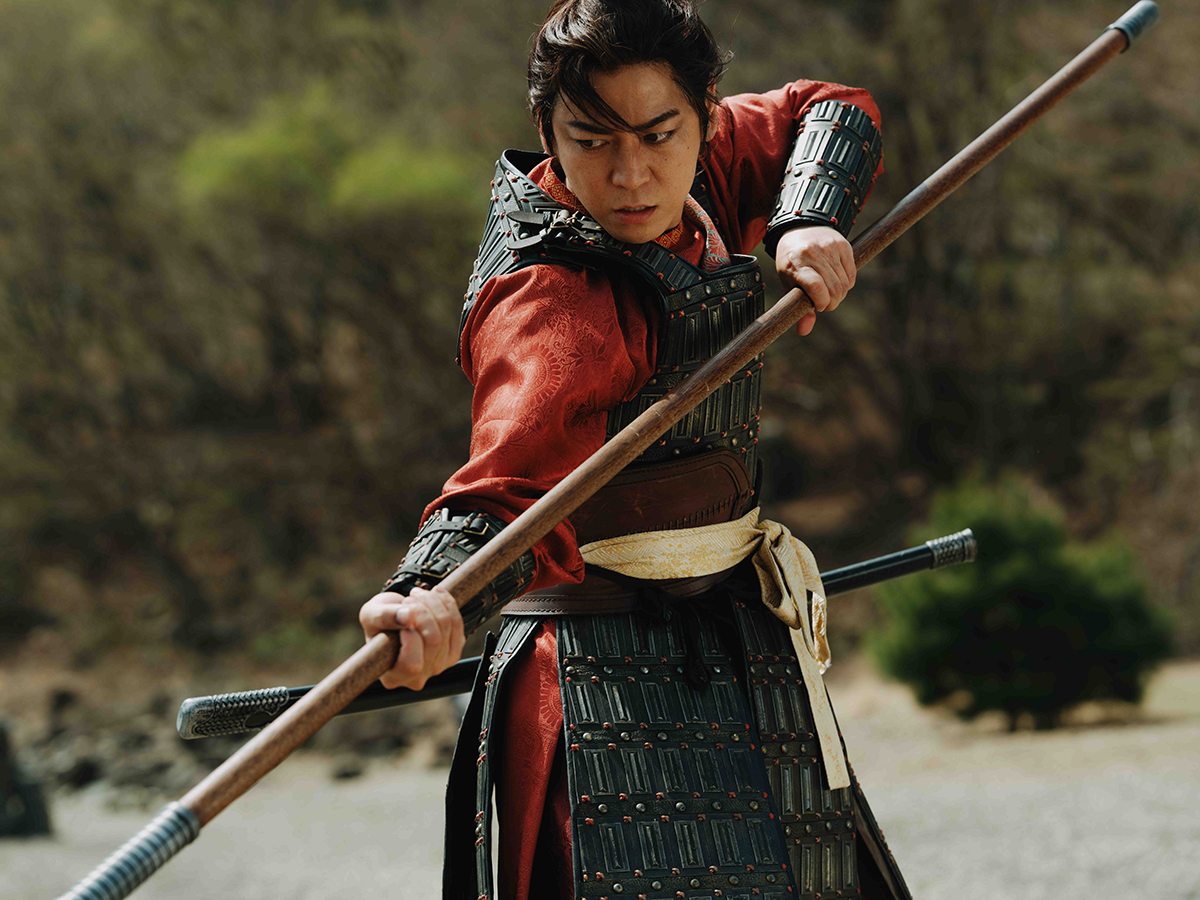
©北方謙三/集英社 ©2026 WOWOW/NTTドコモ
©北方謙三/集英社 ©2026 WOWOW/NTTドコモ

Important Cultural Property, Riverside Scenes During the Qingming Festival, by Zhao Zhe, Ming dynasty, 1577, Hayashibara Museum
*The scene exhibited will be changed during the exhibition
Important Cultural Property, Riverside Scenes During the Qingming Festival, by Zhao Zhe
Ming dynasty, 1577, Hayashibara Museum
*The scene exhibited will be changed during the exhibition
- *Some of the works on display will be changed during the exhibition period.
- *The exhibition details are subject to change due to circumstances.
- *A smartphone is required to use the audio guide (fee: 700 yen, tax included). Please use your own earphones at the venue. Devices are not available for rent on-site.
Information
- Admission Fees
-
Adults: 1,600 (1,400) yen
High school and University students: 1,100 (900) yen
Junior high-school students and younger: Free- *Prices in parentheses ( ) indicate the advance ticket prices.
- *Advance tickets are available online from August 1 to September 18, 2026.
- *Visitors holding a disability ID or similar documentation receive a 500 yen discount for adults, a 200 yen discount for high school and university students, and free admission for one accompanying caregiver.
- *Students must present their student ID upon entry.
- Ticketing
-

Where to Buy Tickets:
- ・At Online
- ・At the Entrance of Tokyo Station Gallery
- *Please purchase tickets online in advance to ensure smooth entry.
- *Please purchase tickets at the museum if you wish to get a discount by presenting a coupon or membership card.
- *Note that there may be some wait times during busy hours.
- Organized by
- TOKYO STATION GALLERY (East Japan Railway Culture Foundation)
- With the Support of
- WOWOW
- With the Cooperation of
- GALLERY BENIYA and The University of Tokyo Asian Research Library
- With the Sponsorship of
- T&D Insurance Group