
Nikolai Astrup The Garden of Growth
Saturday, November 21, 2026 - Sunday, January 31, 2027
- Closed
- Mondays (except November 23, January 11 and January 25), November 24, December 28 to January 2, and January 12
- Hours
- 10:00 am to 6:00 pm (8:00 pm on Fridays)
Last admission is 30 minutes before closing time.
Exhibition Overview
Nature and Life in Norway
Tokyo Station Gallery presents Japan’s first retrospective of Nikolai Astrup (1880–1928), whose international reputation has grown in recent years as one of the most outstanding Norwegian painters of the early twentieth century.
Astrup grew up in Jølster (now part of Sunnfjord), a lakeside community surrounded by steep mountains in western Norway. He made this region his home throughout his life, depicting its natural surroundings and the lives of its people as they changed with the weather and the seasons. His subjects ranged from dreamlike Midsummer celebrations, with bonfires blazing against the light of the summer night sky, to interiors adorned with handcrafted objects and the fruit trees, rhubarb, and other plants he cultivated himself. Above all, the garden came to embody his art: it was both a source of food for daily life and a place of creative experimentation that engaged his artistic imagination.
The appeal of Astrup’s paintings lies in their distinctive symbolism, sustained by his exceptional sensitivity to color. While always depicting the real world, he used vivid colors and boldly distorted forms to transform everyday scenes into symbolic images that awaken the viewer’s memories and senses. Astrup was also a remarkably inventive printmaker. Although influenced by Japanese ukiyo-e prints, he developed an unparalleled method of combining oil painting and woodblock printing. The resulting variations are so extensive that each impression can be considered a unique work.
Alongside oil paintings, this exhibition presents the woodcuts through which Astrup broke new artistic ground, as well as his textile designs, a field of his work now receiving renewed attention. Bringing together major works to offer a comprehensive view of his career, the exhibition invites visitors to discover Astrup’s artistic world and his poetic evocations of nature and life in Norway.
“I am perhaps one of the painters in the country who is most rooted to place and the land.”
―――Nikolai Astrup, 1908
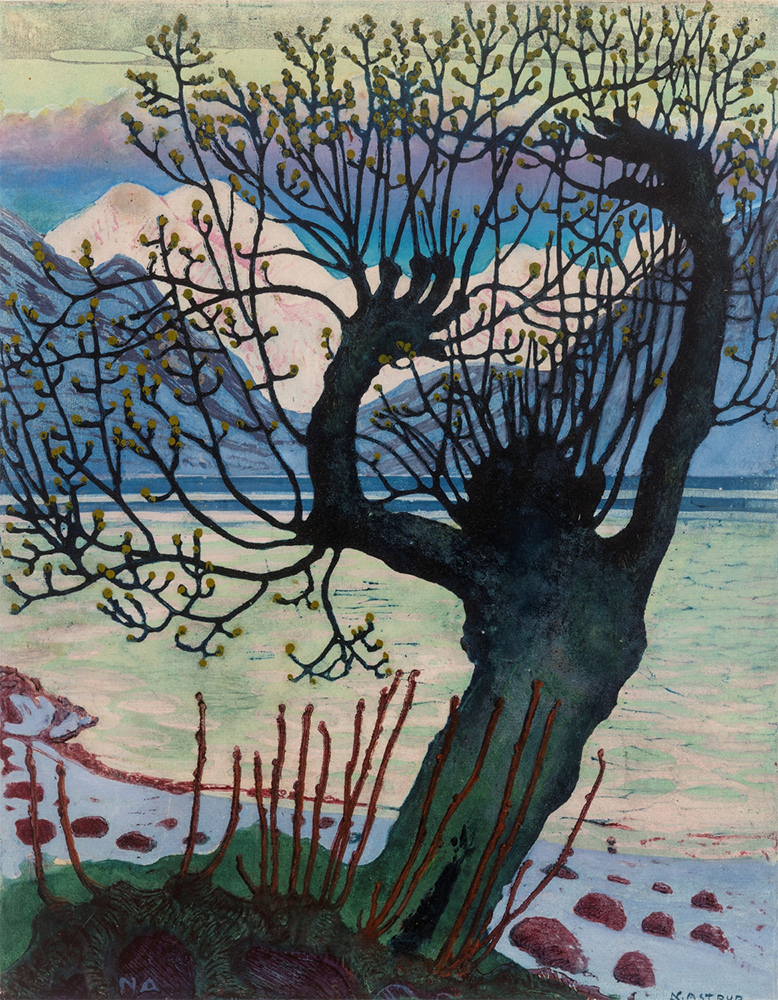
Spring Night and Willow, betw. 1917 and 1927, The Savings Bank Foundation DNB / Kode, Bergen Photo: Dag Fosse / Kode
Spring Night and Willow
betw. 1917 and 1927, The Savings Bank Foundation DNB / Kode, Bergen Photo: Dag Fosse / Kode
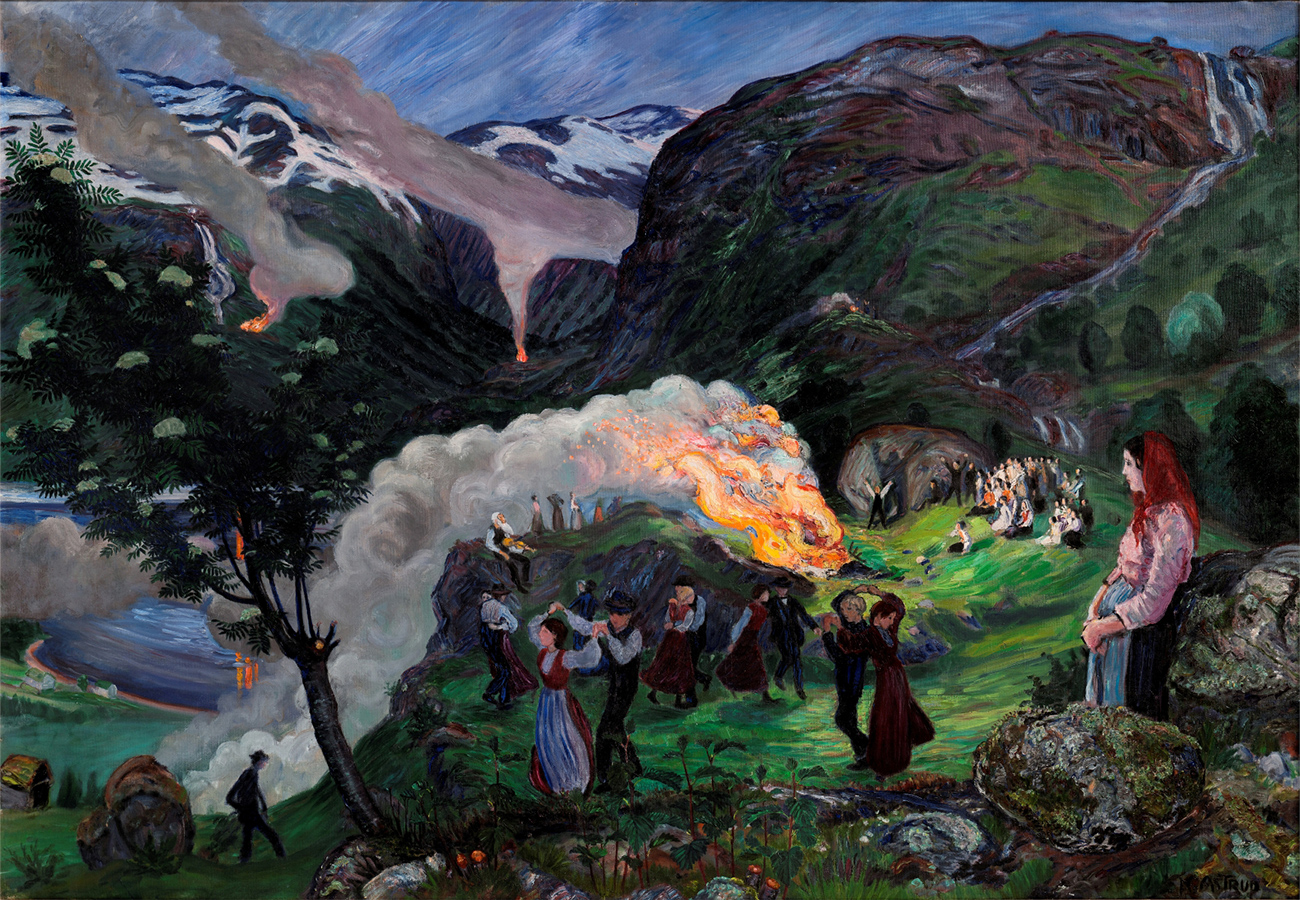
Midsummer Eve Bonfire, 1915, The Savings Bank Foundation DNB / Kode, Bergen Photo: Dag Fosse / Kode
Midsummer Eve Bonfire
1915, The Savings Bank Foundation DNB / Kode, Bergen Photo: Dag Fosse / Kode
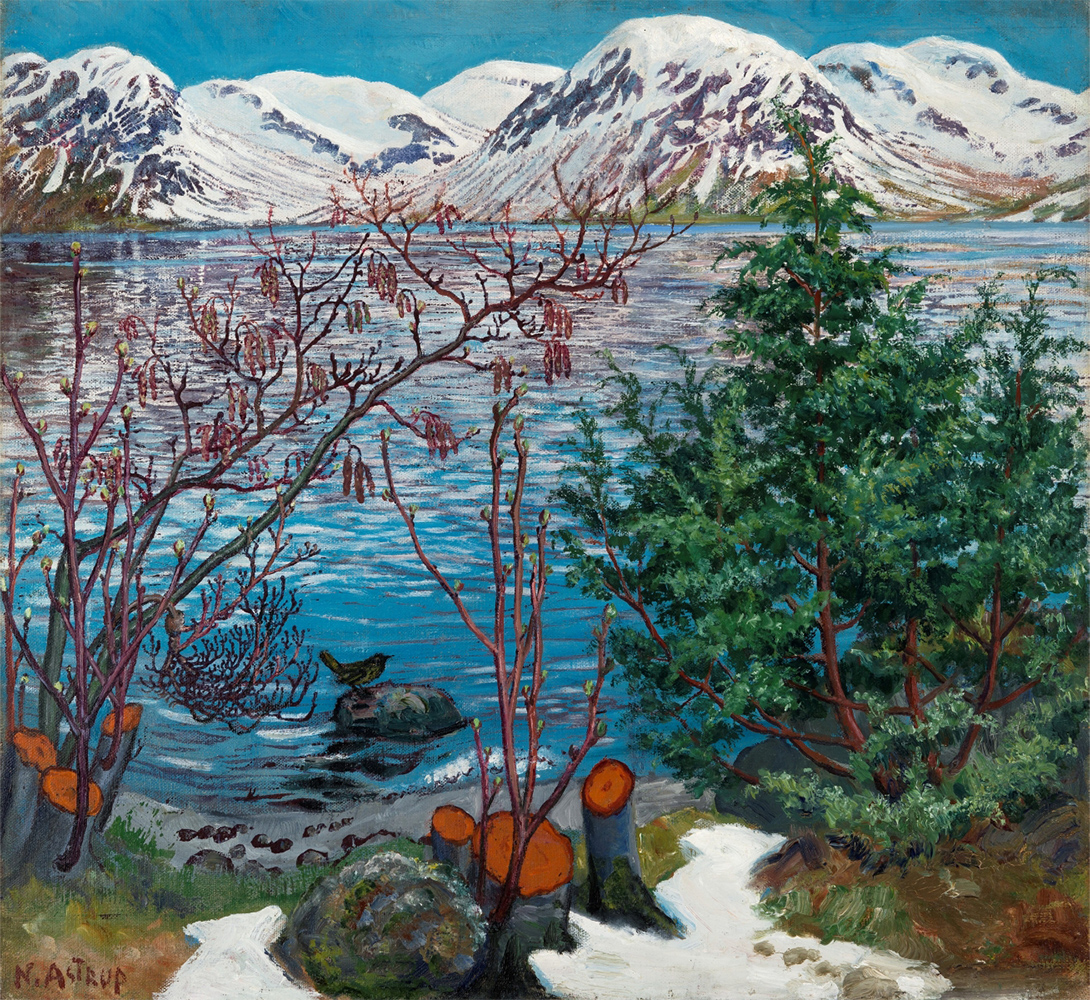
Bird on a Rock, betw. 1908 and 1913, The Savings Bank Foundation DNB / Kode, Bergen Photo: Dag Fosse / Kode
Bird on a Rock
betw. 1908 and 1913, The Savings Bank Foundation DNB / Kode, Bergen Photo: Dag Fosse / Kode
Highlights
More Than Munch
Japan’s first retrospective of another Norwegian master.
When we think of Norway’s leading painters, Edvard Munch is likely to be the first name that comes to mind. Astrup, his contemporary and seventeen years his junior, is well known in Norway, but internationally his art long remained in the shadow of Munch’s overwhelming fame, with few opportunities for wider exposure. Major solo exhibitions that toured in Norway and abroad in 2016 and 2021–2022, however, have brought renewed attention to his work. This exhibition marks his long-awaited first major retrospective in Japan.
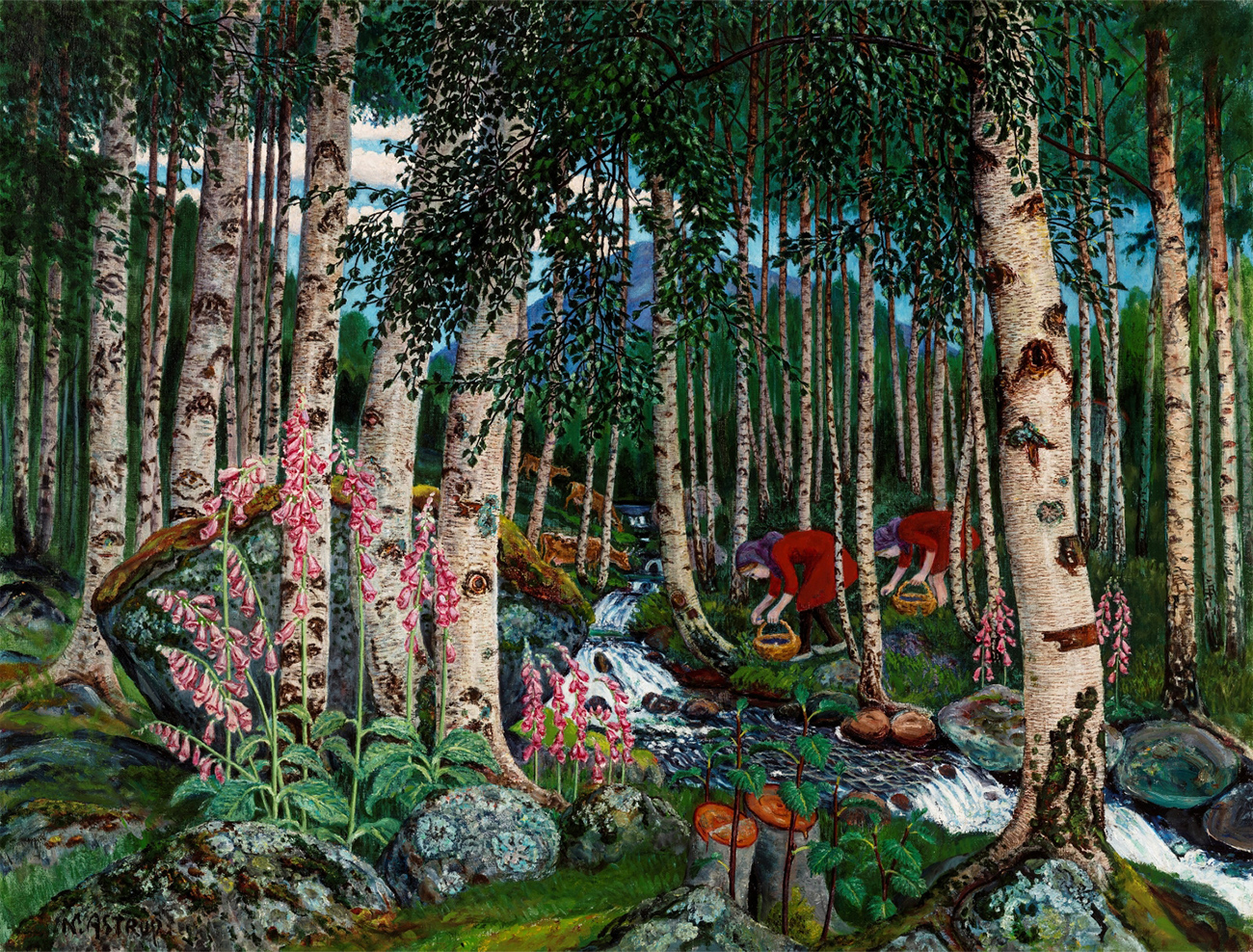
Foxgloves, c. 1920, The Savings Bank Foundation DNB / Kode, Bergen Photo: Dag Fosse / Kode
Foxgloves
c. 1920, The Savings Bank Foundation DNB / Kode, Bergen Photo: Dag Fosse / Kode
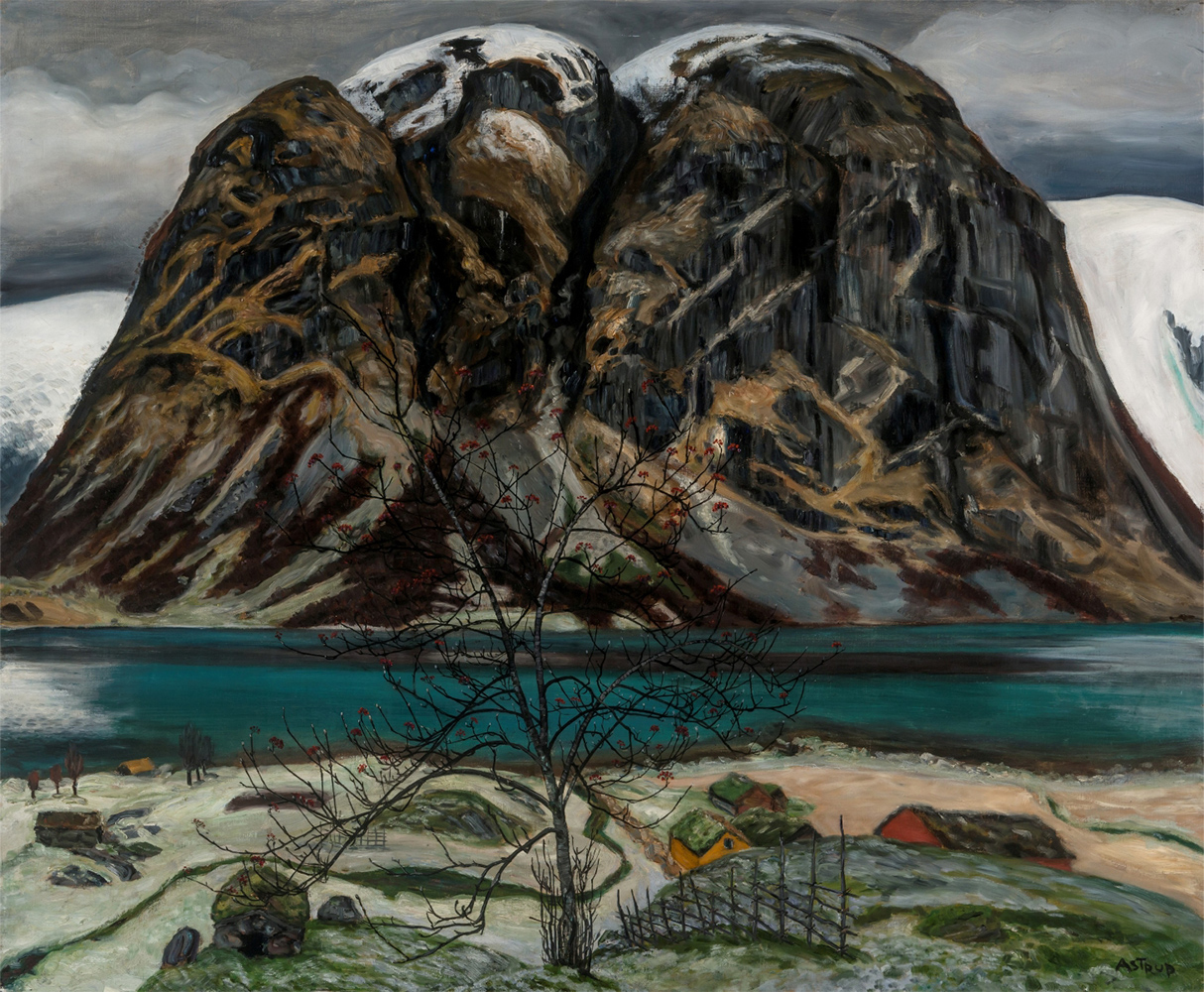
Barren Mountain, 1905–06, The Savings Bank Foundation DNB / Kode, Bergen Photo: Dag Fosse / Kode
Barren Mountain
1905–06, The Savings Bank Foundation DNB / Kode, Bergen Photo: Dag Fosse / Kode
The Artist and Horticulturist
An experience akin to strolling through the gardens at the heart of Astrup’s art.
Astrup’s passion for plants led him to acquire a wide variety of young trees and experiment continually with growing them in his garden. The garden can also be seen as a metaphor for his art, sustained by an inexhaustible spirit of inquiry. This exhibition brings together works depicting the two gardens that nourished his creativity: the garden of the parsonage at Ålhus, where he spent his childhood, and the garden he created from scratch at Sandalstrand, his final home. The nuanced shades of green, said to have been admired by Munch, are a particular highlight. Footage of the changing seasons, filmed on location especially for this exhibition, creates an immersive setting in which to explore the essence of Astrup’s art.
“I have, as you perhaps know, a weakness for experimenting with all sorts of possible and impossible plants, that can grow here in the mountain village — well also those that can — not grow here.”
―――Nikolai Astrup, 1918
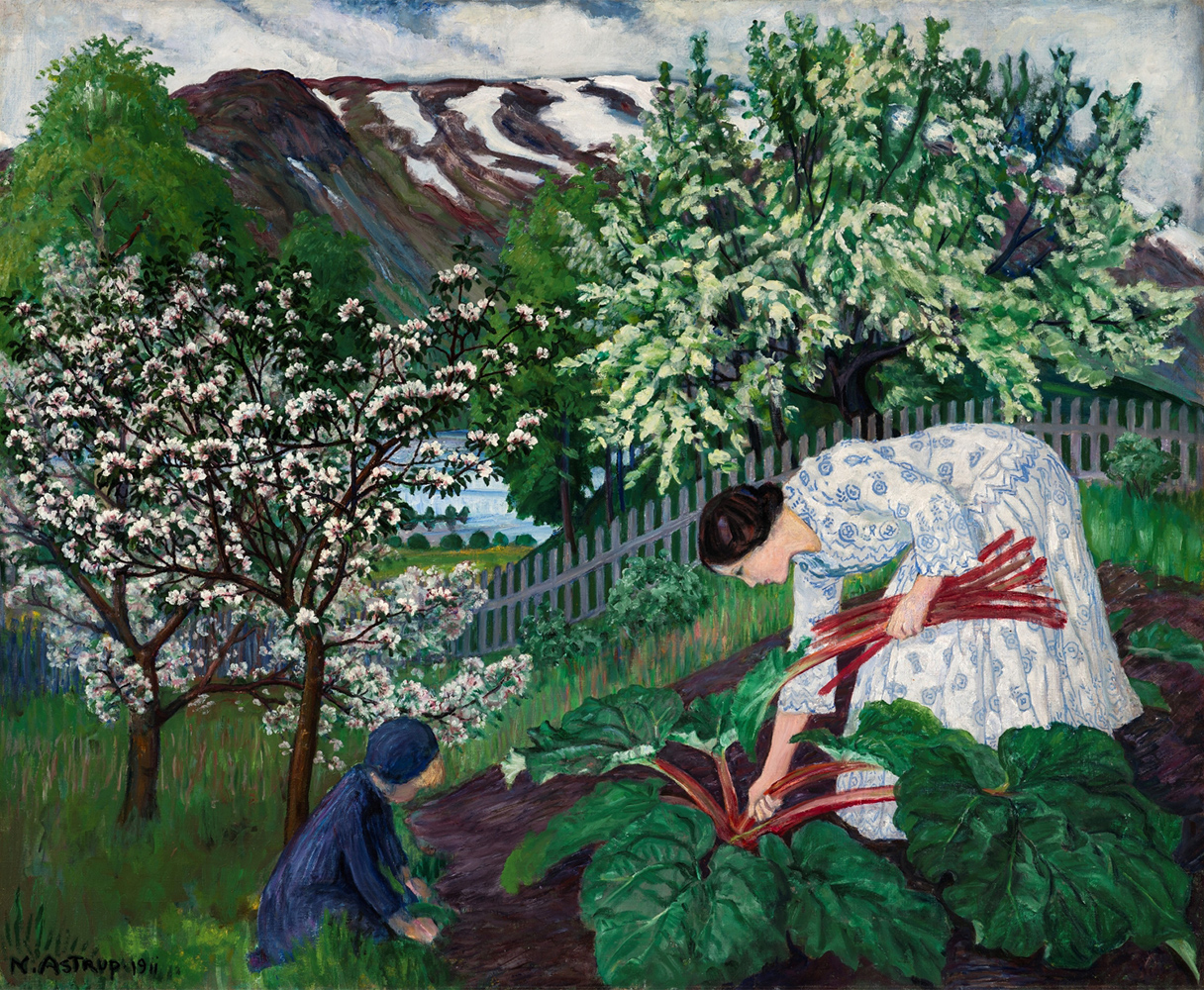
Rhubarb, 1911–21, The Savings Bank Foundation DNB / Kode, Bergen Photo: Dag Fosse / Kode
Rhubarb
1911–21, The Savings Bank Foundation DNB / Kode, Bergen Photo: Dag Fosse / Kode
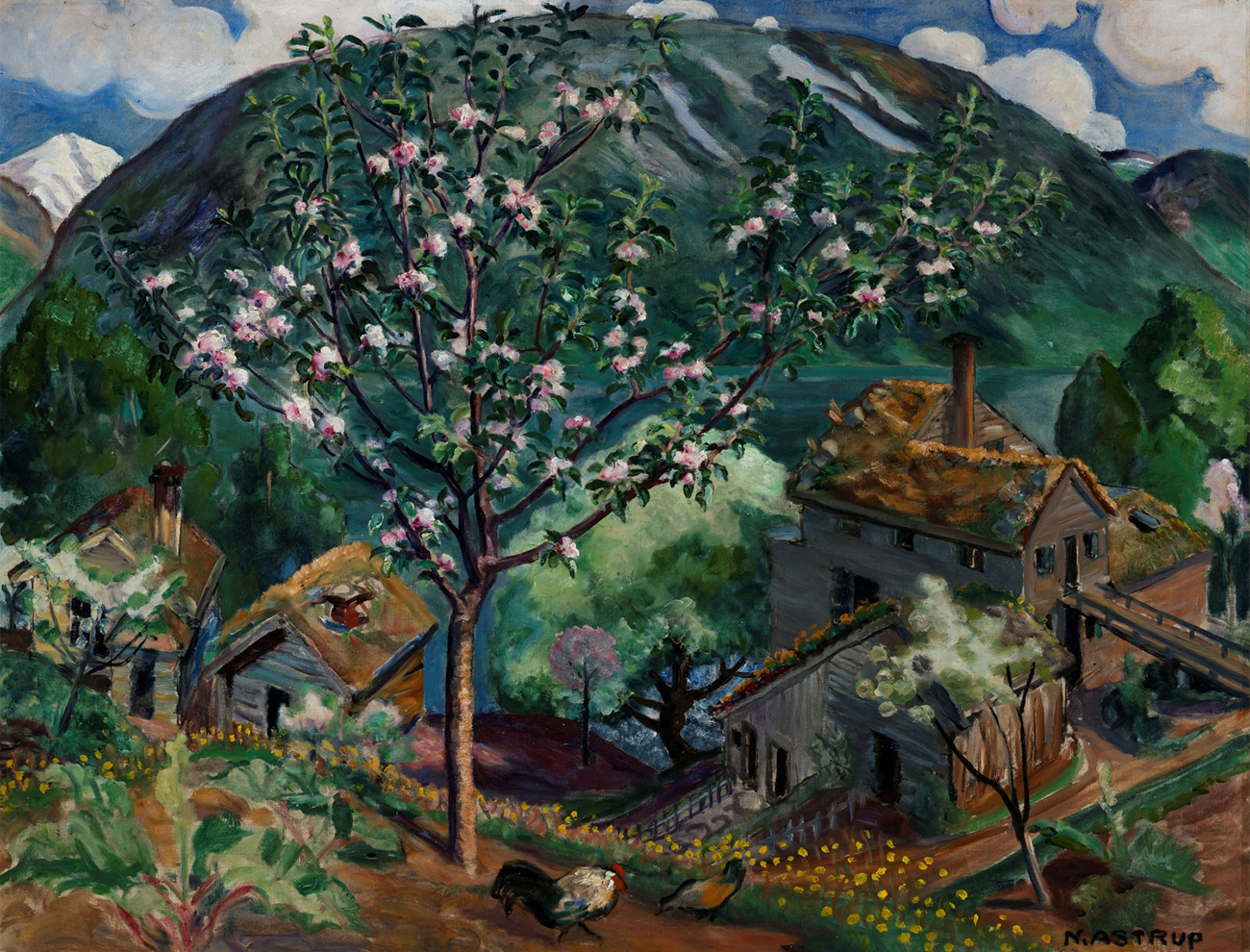
Apple Tree in Bloom, 1926–27, The Savings Bank Foundation DNB / Kode, Bergen Photo: Dag Fosse / Kode
Apple Tree in Bloom
1926–27, The Savings Bank Foundation DNB / Kode, Bergen Photo: Dag Fosse / Kode
Crossover Between Woodcut and Oil Painting
Works that cross the boundaries between media, shown alongside their printing blocks.
Astrup’s prints were highly unconventional. Their defining feature is his unique approach, which moved freely between woodcut and oil painting: he added details by hand to individual impressions and combined printing from woodblocks with painting directly on canvas. Living far from the workshops of major cities, Astrup had to carry out every stage of the process himself. As a result, he developed his own techniques. Arrived at through repeated trial and error, these methods required considerable time and effort. By displaying his woodcuts and oil paintings alongside his printing blocks, this exhibition reveals the secrets of his extraordinary creative process.
“It would be far too boring and unartistic if I was to make all the impressions exactly the same.”
―――Nikolai Astrup, 1927
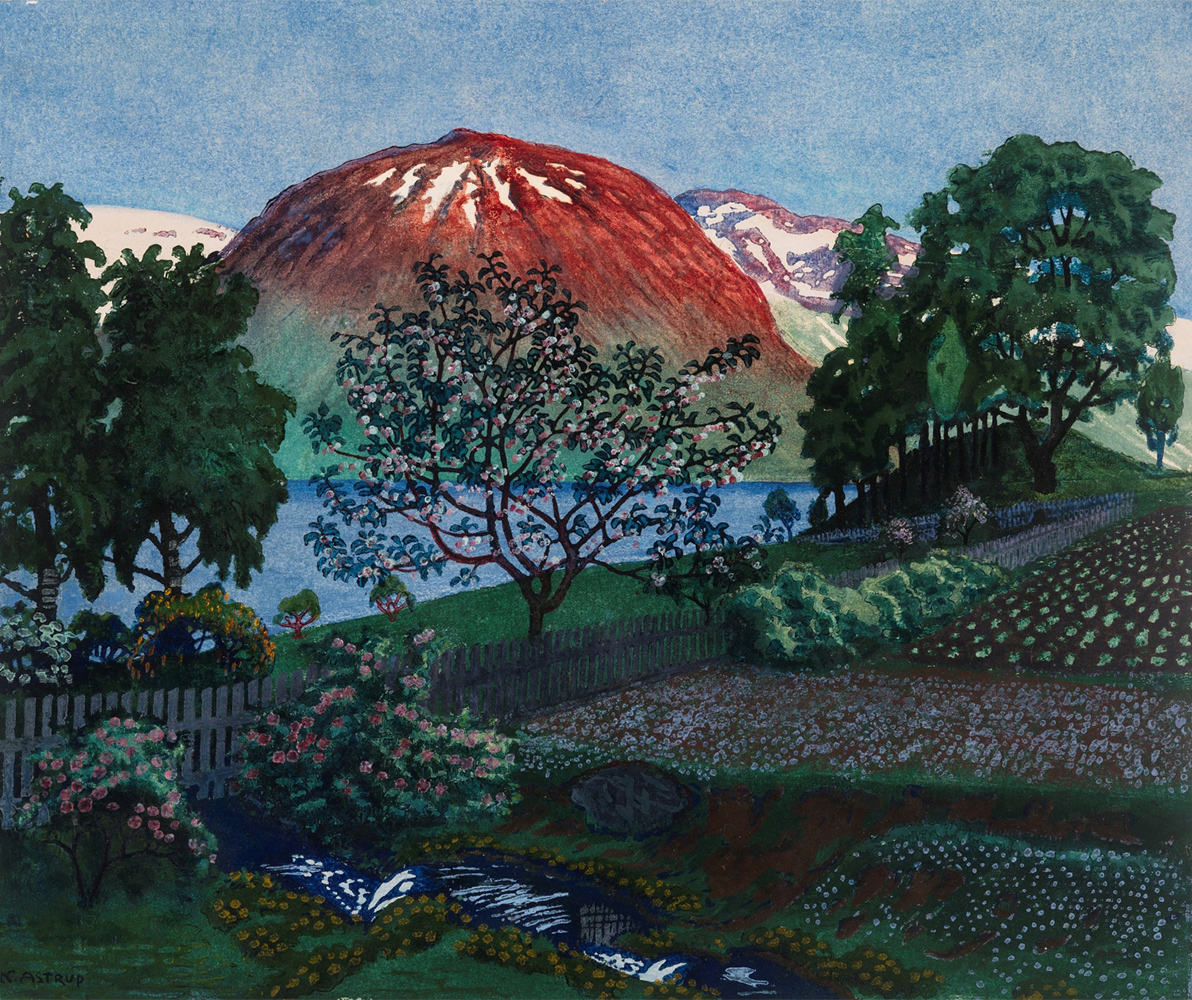
A Night in June in the Garden, betw. 1909 and 1927, The Savings Bank Foundation DNB / Kode, Bergen Photo: Dag Fosse / Kode
A Night in June in the Garden
betw. 1909 and 1927, The Savings Bank Foundation DNB / Kode, Bergen Photo: Dag Fosse / Kode
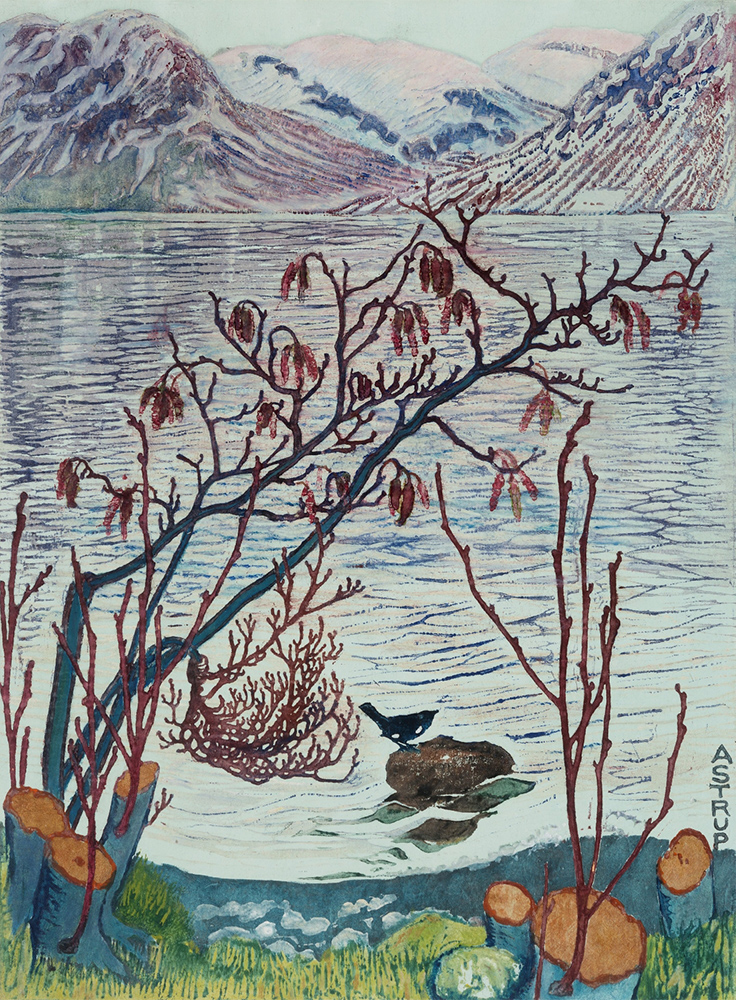
Bird on a Rock, betw. 1911 and 1927, The Savings Bank Foundation DNB / Kode, Bergen Photo: Dag Fosse / Kode
Bird on a Rock
betw. 1911 and 1927, The Savings Bank Foundation DNB / Kode, Bergen Photo: Dag Fosse / Kode
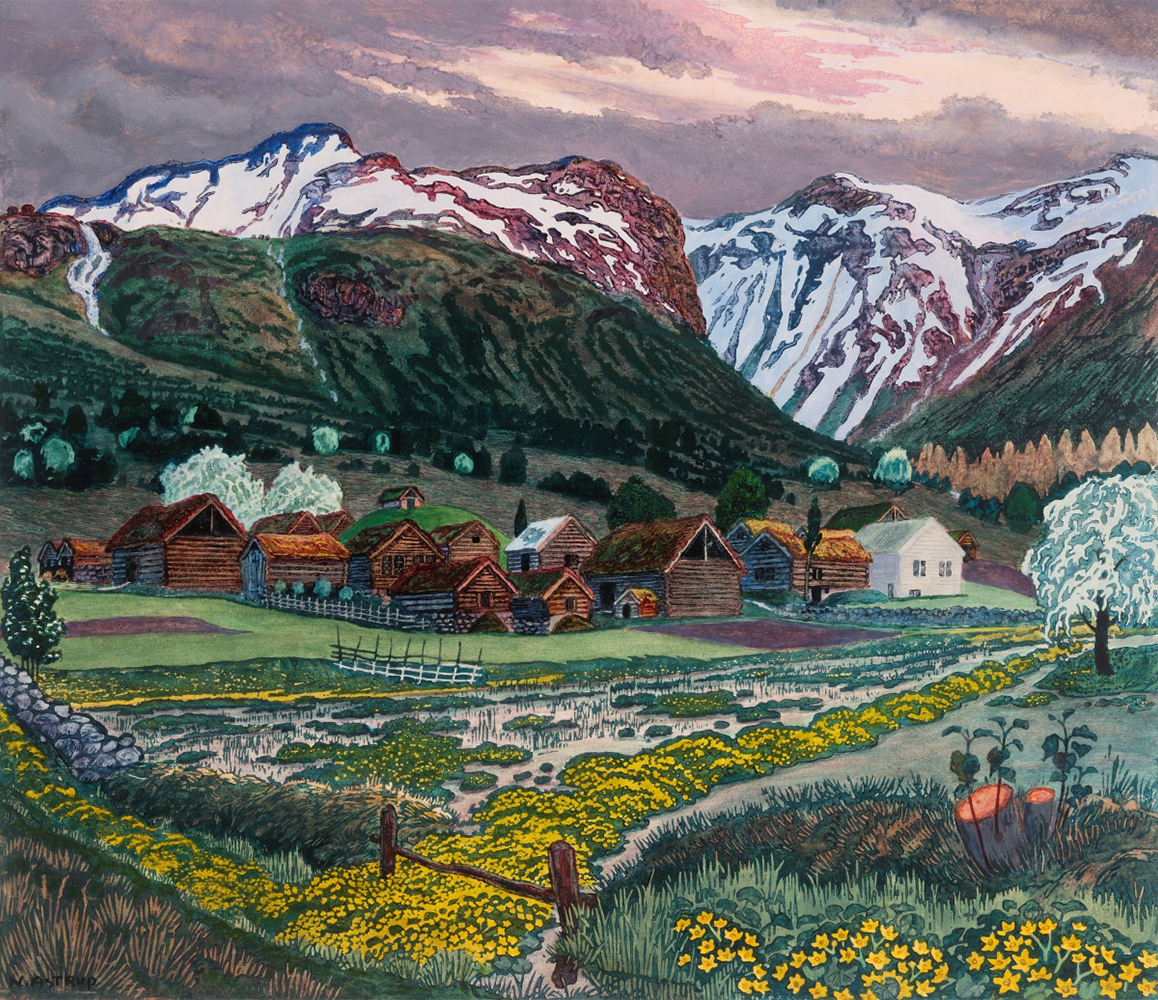
Marsh Marigold Night, betw. 1915 and 1927, The Savings Bank Foundation DNB / Kode, Bergen Photo: Dag Fosse / Kode
Marsh Marigold Night
betw. 1915 and 1927, The Savings Bank Foundation DNB / Kode, Bergen Photo: Dag Fosse / Kode
Growing Up and Living with Art
Shedding light on Astrup’s textile work with his mother.
Astrup’s mother was a textile artist who played a leading role in the local community. Before fully embarking on his career as a painter, Astrup himself produced textile designs inspired by local plants. The textiles his mother wove from his designs were highly regarded, winning awards at exhibitions in Norway. Presenting this increasingly recognized aspect of his work, the exhibition examines how growing up in a household where artistic handwork was part of daily life shaped Astrup’s creative practice.
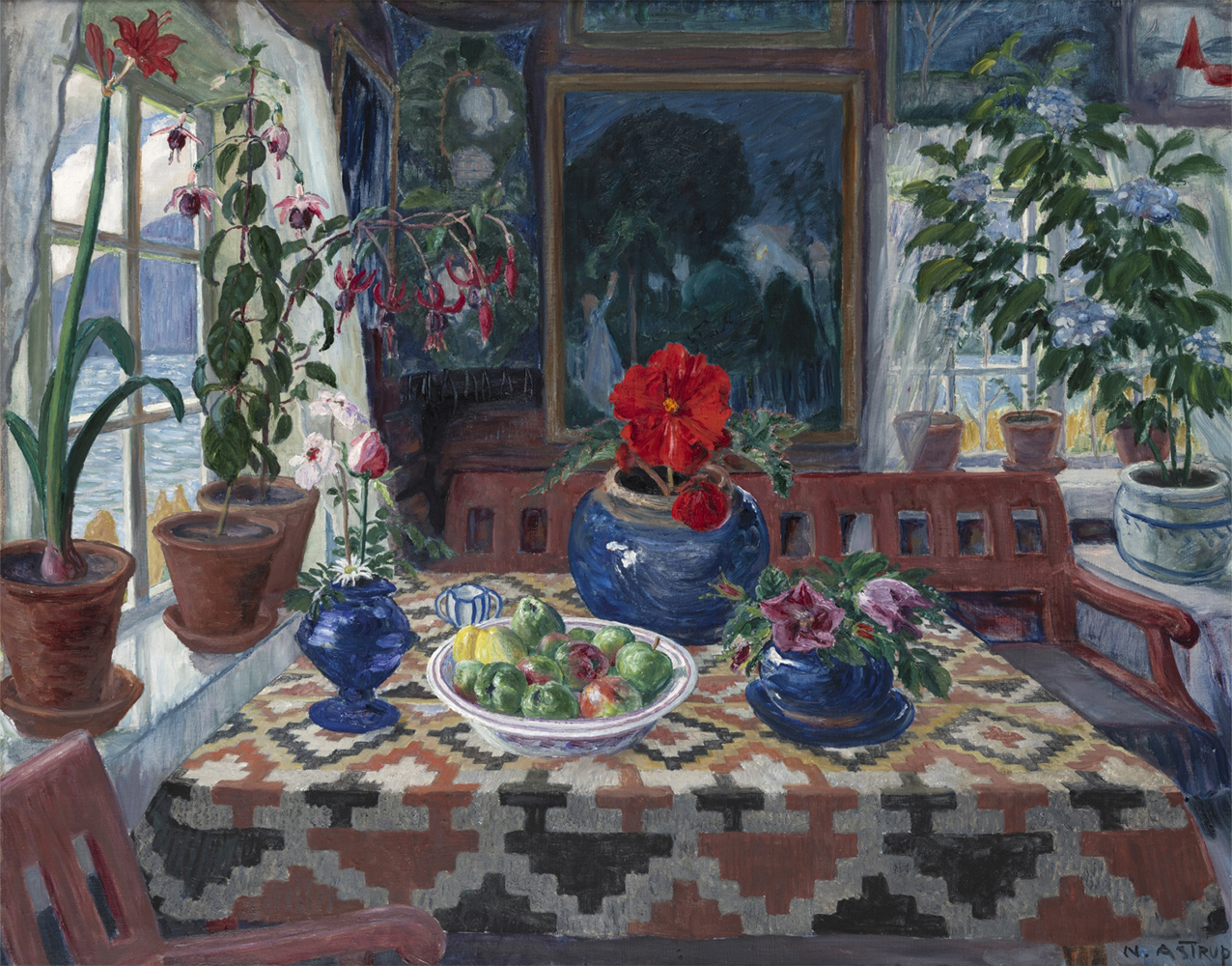
Interior Still Life with Large Blue Vase, 1921–22, Private collection Photo: Thomas Widerberg
Interior Still Life with Large Blue Vase
1921–22, Private collection Photo: Thomas Widerberg
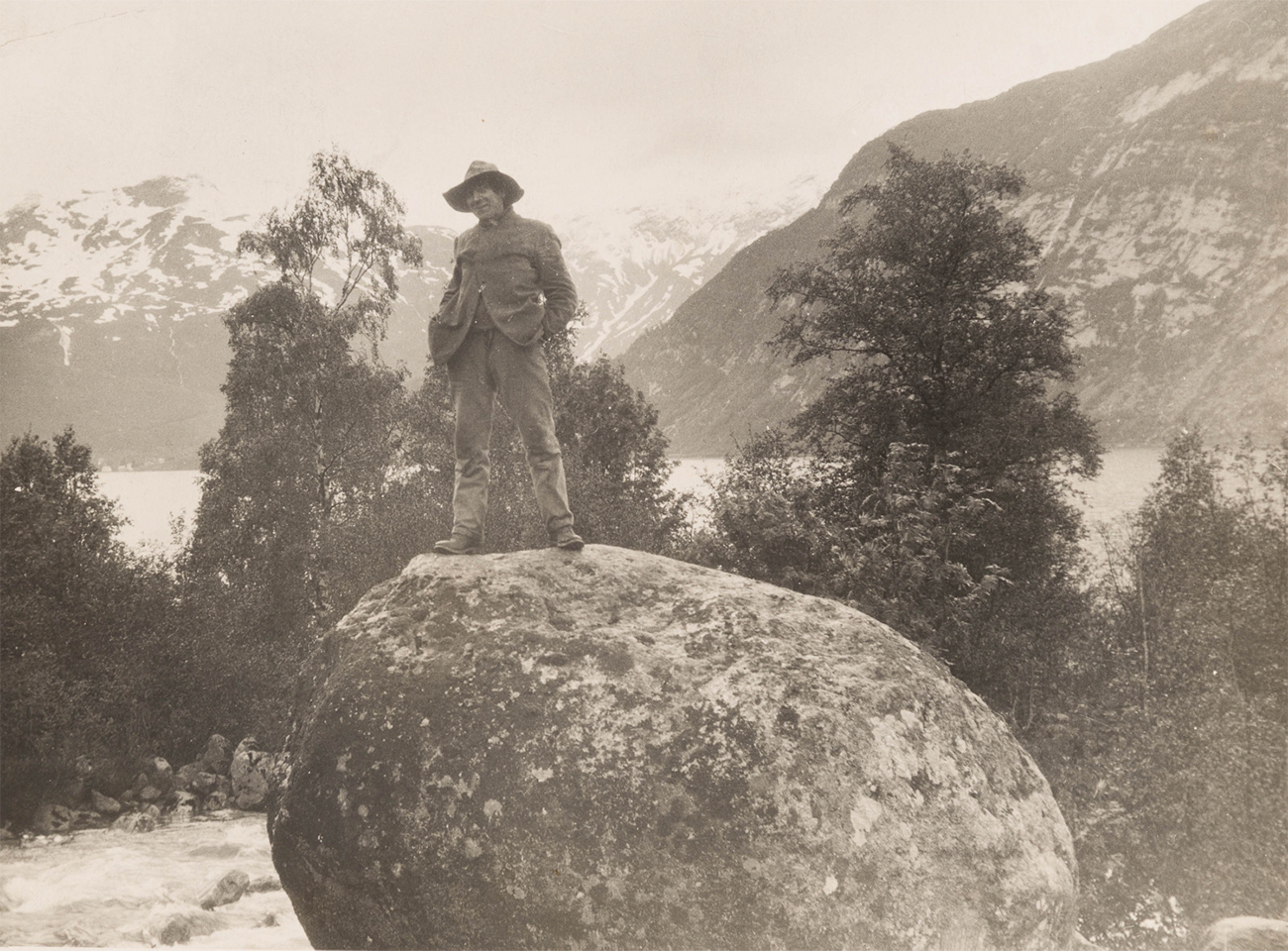
Nikolai Astrup, photograph by Per Kramer, c. 1920, Private collection
Nikolai Astrup, photograph by Per Kramer
c. 1920, Private collection
- *The exhibition details are subject to change due to circumstances.
Information
- Admission Fees
-
Adults: 1,800 (1,600) yen
High school and University students: 1,300 (1,100) yen
Junior high-school students and younger: Free- *Prices in parentheses ( ) indicate the advance ticket prices.
- *Advance tickets are available online from October 15 to November 20, 2026.
- *Visitors holding a disability ID or similar documentation receive a 500 yen discount for adults, a 200 yen discount for high school and university students, and free admission for one accompanying caregiver.
- *Students must present their student ID upon entry.
- Ticketing
-

Where to Buy Tickets:
- ・At Online
- ・At the Entrance of Tokyo Station Gallery
- *Please purchase tickets online in advance to ensure smooth entry.
- *Please purchase tickets at the museum if you wish to get a discount by presenting a coupon or membership card.
- *Note that there may be some wait times during busy hours.
- Organized by
- TOKYO STATION GALLERY (East Japan Railway Culture Foundation) and The Sankei Shimbun
- In special cooperation with
- The Savings Bank Foundation DNB, Norway and Kode Bergen Art Museum
- Supported by
- The Norwegian Embassy in Tokyo
- Sponsored by
- T&D Insurance Group, Dai Nippon Printing Co., Ltd. (DNP), and Koyama Medical and Welfare Group Ginza Hospital
- Produced in cooperation with
- S2